Rebuilding one-to-one WebRTC into real group calls
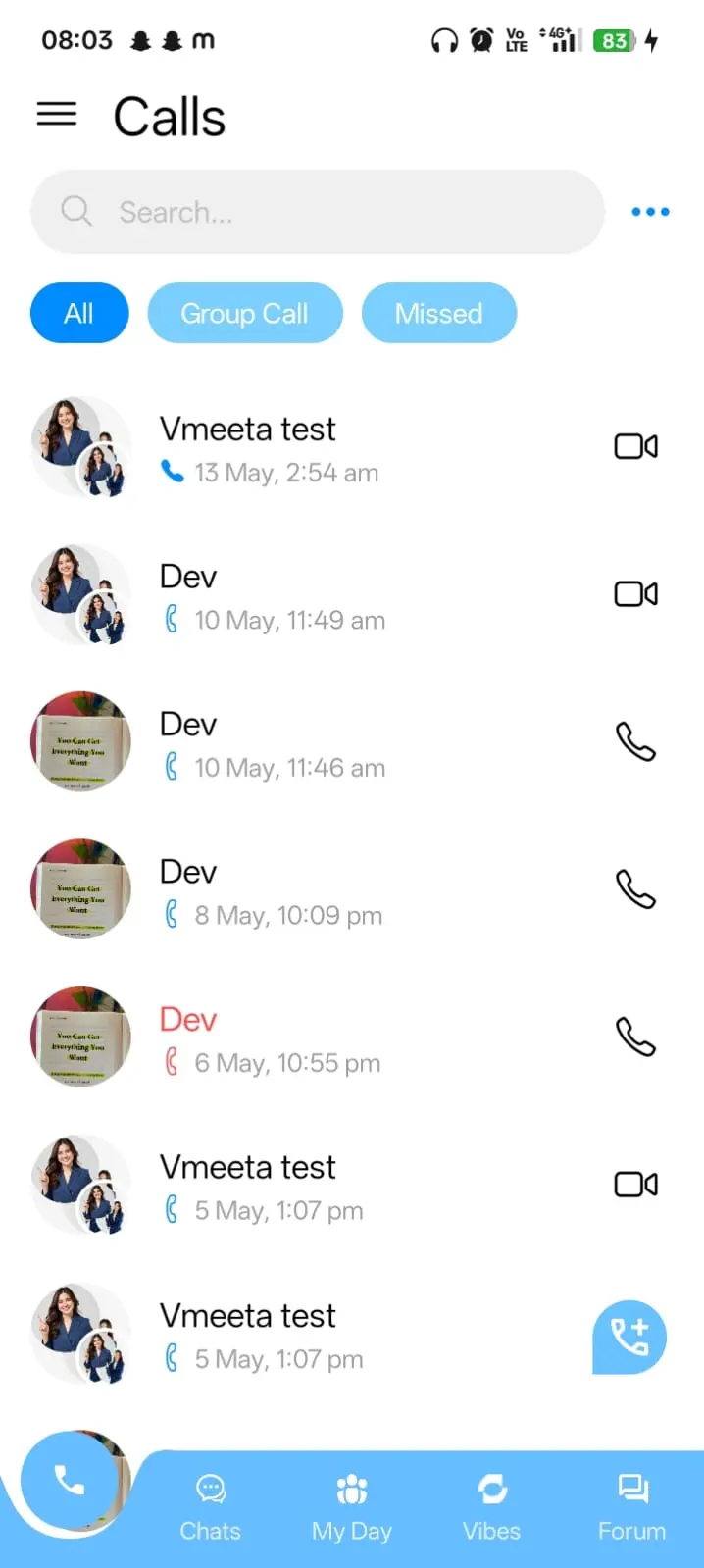
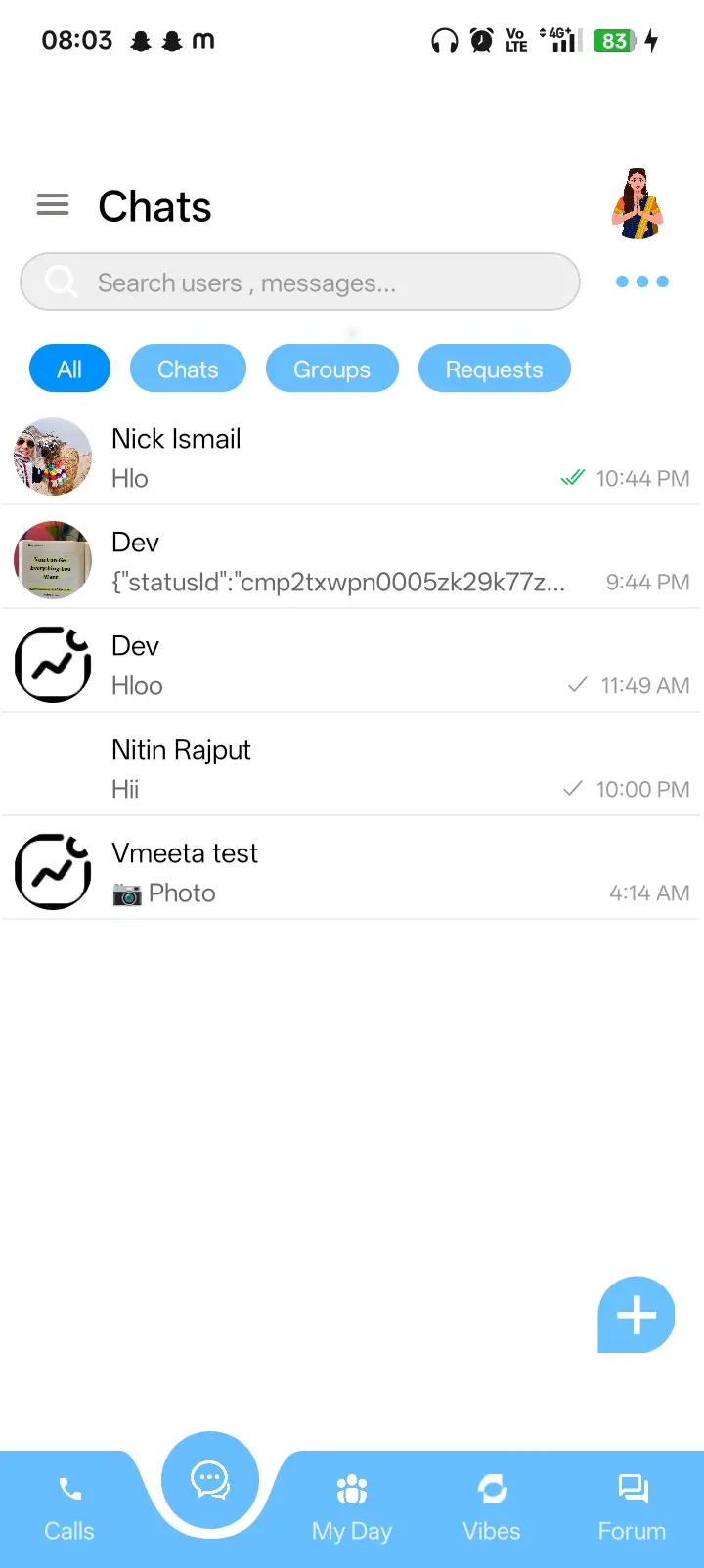
One-to-one calls used peer-to-peer WebRTC. Group calls reused a shared-room
SFU that only supported a single broadcaster, so in a three-person call two
participants stared at a blank tile. I moved it onto per-user producer
streams on mediasoup, then added transport recovery and rejoin-on-reconnect
so a call survives the network drops that are normal on Indian mobile data.
VMeeta · React Native · mediasoup · Socket.io · ⟨n⟩ concurrent peers
Read more
What happens when two bids land in the same tick
A live auction is a correctness problem disguised as a UI problem. Two bids
arriving in the same instant can leave the lower one winning if you just
write both. Bid acceptance is serialised server-side so the higher offer
always survives, and every client converges on the same state.
GreenBidz · React · Node · Socket.io · MongoDB · ⟨n⟩ concurrent bidders
Read more
Personalisation that still answers fast
Replaced a reverse-chronological feed with a scoring pipeline — interest
learning, diversity, and a penalty for things you’ve already seen.
Classification runs out of band on a schedule, never during a request, so
the read path stays predictable no matter how heavy the scoring gets.
VMeeta · Node · MongoDB aggregation · p95 ⟨n⟩ ms · 6 signals
Read more
A single-broadcaster SFU, three participants, and two blank tiles — what the topology was actually doing, and the fix.
Read more
Treating a dropped socket as “left the call” is wrong on mobile. What a reconnect window costs you, and what it buys.
Read more